
Hair loss is a common issue faced by individuals worldwide, and in India, particularly in cities like Hyderabad, it is an increasing concern. While factors like stress, genetics, and poor nutrition contribute to hair thinning, advancements in medical technology have led to innovative treatments to help combat hair fall. Among these therapies, Platelet-Rich Plasma (PRP) and Growth Factor Concentrate (GFC) have gained significant attention for their potential in treating various hair loss conditions, including Telogen Effluvium and Androgenic Alopecia.
In this blog, we will explore what PRP and GFC therapy are, how they work, and their role in treating hair loss conditions.
What is Platelet-Rich Plasma (PRP)?
Platelet-Rich Plasma (PRP) is a treatment that involves using the body’s own blood to stimulate hair growth. The therapy uses concentrated plasma derived from a patient’s blood, which contains platelets—the cells responsible for tissue repair and healing. The process of preparing PRP involves drawing a small amount of blood from the patient, processing it to concentrate the platelets, and then injecting the enriched plasma into the scalp.
How Does PRP Work for Hair Loss?
PRP therapy stimulates hair follicles in several ways:
- Promotes Hair Follicle Regeneration: The platelets contain growth factors that encourage the regeneration of damaged hair follicles, boosting hair growth.
- Enhances Blood Supply to the Scalp: By injecting PRP into the scalp, it improves circulation to the hair follicles, ensuring they receive an adequate supply of nutrients and oxygen for optimal growth.
- Increases Anagen (Growth) Phase of Hair: PRP helps extend the anagen (growth) phase of the hair cycle, which means hair remains in the growth phase for a longer period.
- Reduces Inflammation: PRP has natural anti-inflammatory properties that help reduce scalp inflammation, which is often linked with hair loss conditions.
What is Growth Factor Concentrate (GFC)?
Growth Factor Concentrate (GFC) is a newer approach similar to PRP but involves a more refined and concentrated version of growth factors found in the blood. GFC is extracted from a patient’s blood through a specific process that isolates the growth factors, which are essential for healing and tissue regeneration.
How Does GFC Work for Hair Loss?
Similar to PRP, GFC therapy works by using growth factors to stimulate hair growth. However, GFC typically contains a higher concentration of growth factors compared to PRP. It helps in:
- Stimulating Dormant Hair Follicles: GFC targets dormant or inactive hair follicles and promotes their revival, leading to increased hair density.
- Improving Scalp Health: By stimulating collagen production and improving circulation, GFC creates a healthier scalp environment conducive to hair growth.
- Reducing Hair Fall: GFC aids in minimizing hair shedding and promotes thicker, healthier hair strands.
Hair Loss Conditions Treated with PRP and GFC
Both PRP and GFC therapy are effective in treating several types of hair loss, but they are most commonly used for conditions such as Telogen Effluvium and Androgenic Alopecia.
1. Telogen Effluvium
Telogen Effluvium (TE) is a temporary form of hair loss that occurs when a significant number of hair follicles enter the telogen (resting) phase prematurely, causing excessive shedding. This condition is often triggered by stress, trauma, illness, pregnancy, or major lifestyle changes.
- How PRP and GFC Help with TE: Both PRP and GFC can help stimulate hair follicles and promote their transition back into the anagen (growth) phase. By increasing circulation and delivering growth factors directly to the scalp, these therapies can support the regeneration of hair and minimize shedding.
2. Androgenic Alopecia (Male and Female Pattern Baldness)
Androgenic Alopecia is a genetic condition that causes progressive hair thinning, often resulting in bald patches in both men and women. It is typically linked to hormonal changes, specifically an imbalance in androgens (male hormones), which affect the hair follicles.
- How PRP and GFC Help with Androgenic Alopecia: PRP and GFC therapies can reverse miniaturization of hair follicles, a hallmark of androgenic alopecia. The therapies stimulate hair growth in affected areas, increase hair density, and improve the overall quality of the hair.
The PRP and GFC Treatment Process
Both PRP and GFC treatments are non-surgical procedures performed in a clinic setting. Here’s an overview of the typical process:
- Consultation: The first step is a consultation with a dermatologist to assess the cause of your hair loss and determine if PRP or GFC therapy is suitable for you.
- Blood Collection: A small amount of blood (usually 10-20 ml) is drawn from your arm.
- Processing: The blood is processed in a centrifuge to separate and concentrate the platelets (for PRP) or growth factors (for GFC).
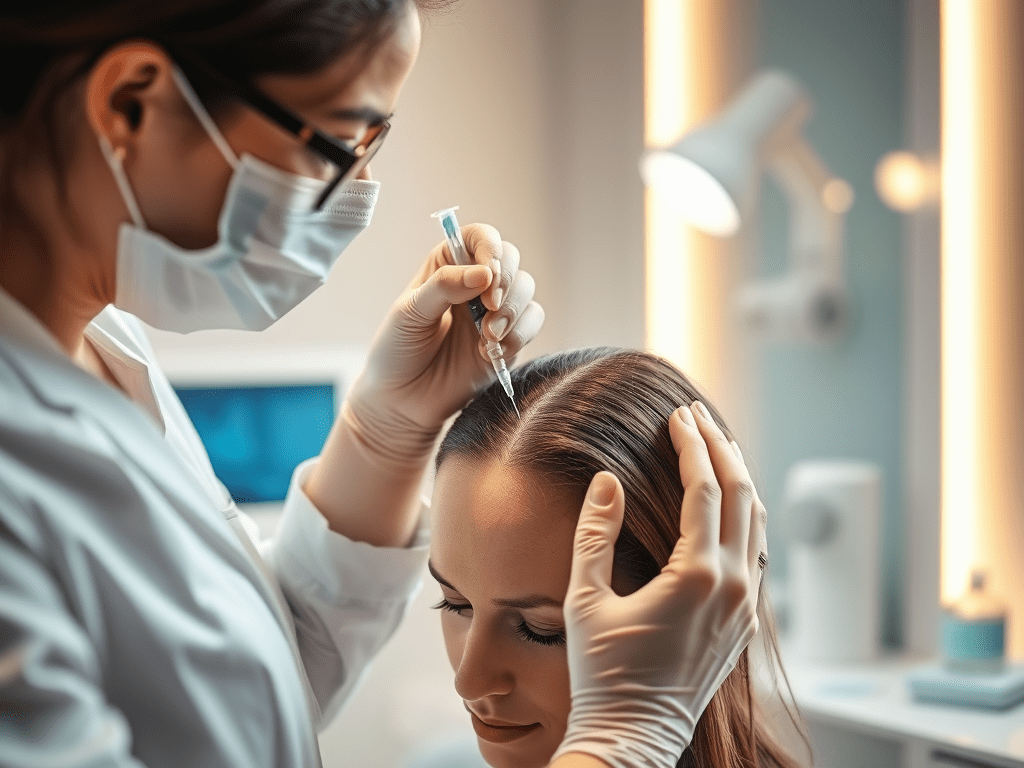
- Injection into Scalp: The concentrated PRP or GFC is then injected into the scalp at the areas where hair thinning or loss is noticeable. The injections are performed using a fine needle, and while some discomfort may be experienced, the procedure is generally well-tolerated.
- Post-Treatment Care: There is minimal downtime after the procedure. Patients may experience mild redness or swelling at the injection sites, but these side effects typically subside within a few hours to a day.
Benefits of PRP and GFC for Hair Loss Treatment
- Non-Surgical: Unlike hair transplant surgery, PRP and GFC are non-invasive and do not require cuts or stitches, making them ideal for patients who prefer a less invasive solution.
- Natural Treatment: Since both therapies use the patient’s own blood, the risk of allergic reactions or side effects is minimal.
- Minimal Downtime: PRP and GFC procedures are quick, and most people can return to their normal activities within a day or two.
- Effective for Both Men and Women: These therapies are beneficial for both male and female pattern baldness, as well as other forms of hair loss like Telogen Effluvium.
- Long-Lasting Results: With consistent treatments, patients can enjoy long-term results in terms of reduced hair loss, thicker hair, and enhanced hair growth.
Considerations and Side Effects
While PRP and GFC therapies are generally safe, there are a few factors to consider:
- Number of Sessions: Multiple sessions are usually required for optimal results. Typically, 3-4 sessions are performed at 4-6 week intervals, followed by maintenance treatments every 6-12 months.
- Results Take Time: Hair growth is a gradual process. Visible results typically appear within 3-6 months after the first treatment.
- Temporary Side Effects: Some mild redness, swelling, or tenderness at the injection sites may occur, but these side effects are usually temporary and subside quickly.
- Not Suitable for Everyone: Patients with certain conditions, such as blood disorders or active scalp infections, may not be suitable candidates for PRP or GFC therapy.
Conclusion
PRP and GFC therapies are groundbreaking treatments for hair loss, offering a natural and effective solution for individuals suffering from conditions like Telogen Effluvium and Androgenic Alopecia. By using the body’s own growth factors, these therapies stimulate hair growth, improve scalp health, and reverse the effects of hair thinning.
These treatments offer a promising option for tackling hair fall in a non-invasive and safe manner. If you’re struggling with hair loss, consult with a qualified dermatologist to explore whether PRP or GFC therapy could be the right solution for you.
Disclaimer: Always consult with a medical professional before undergoing any hair loss treatments.
 Dr. Sindhuja T, MD
Leave a comment