
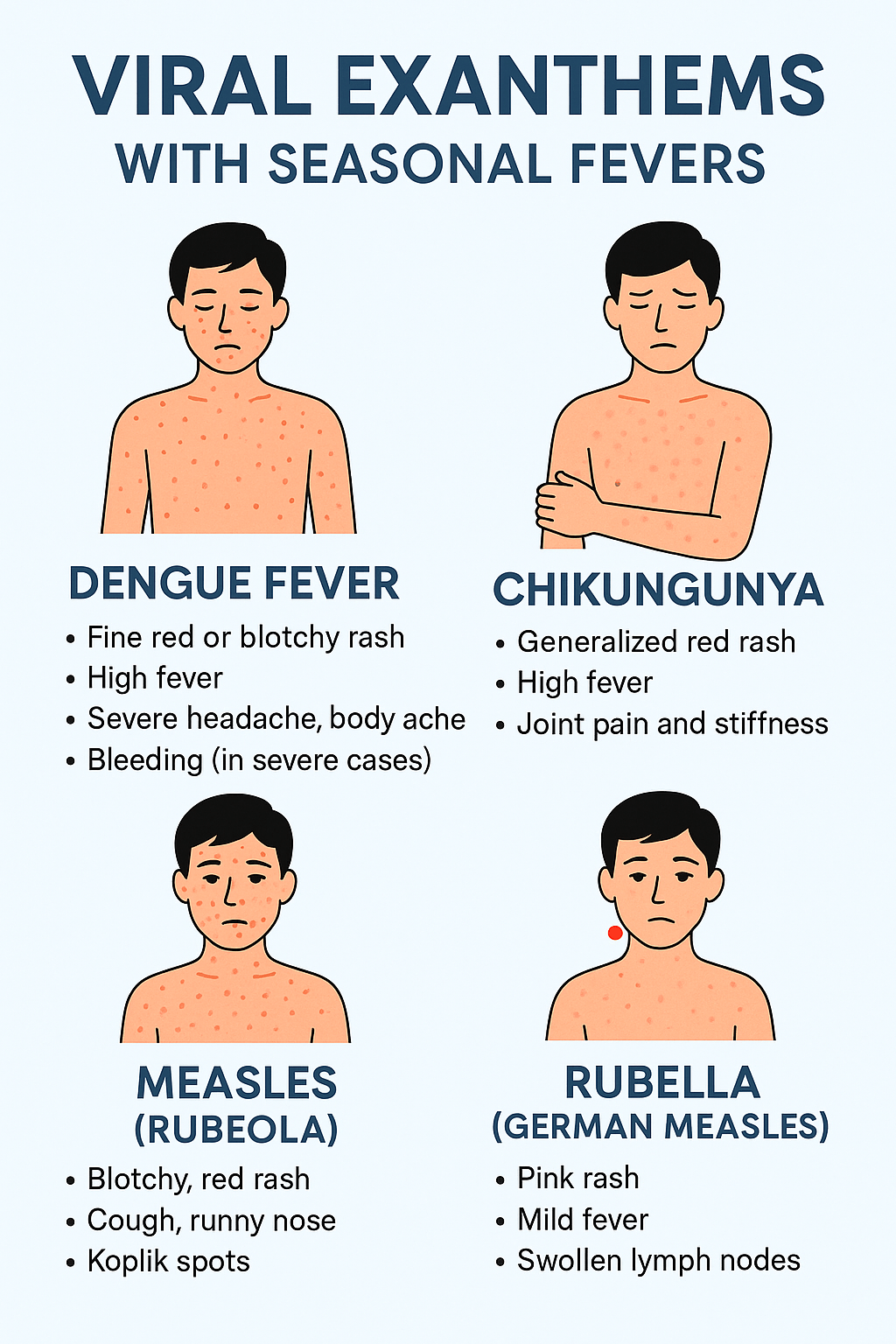
As the monsoon sets in, so does a spike in seasonal infections — many of which present with fever and skin rashes. These skin rashes, known as viral exanthems, often appear suddenly, triggering anxiety in families, especially when children are affected.
In this blog, we’ll break down what viral exanthems are, which seasonal fevers they accompany, how to recognize them, and when to seek medical attention.
🌡️ What is a Viral Exanthem?
The word “exanthem” refers to a skin eruption or rash that is often widespread, appearing during the course of an infection. When caused by a virus, it’s termed a viral exanthem.
Common Features:
- Often accompanies fever and other systemic symptoms (fatigue, cough, joint pains)
- Typically appears a few days after the onset of fever
- Usually non-itchy, red or pink, flat or raised spots
- Affects the trunk, face, and extremities
Viral exanthems are more common in children, but several are seen in adults — especially during the rainy season in tropical areas like Hyderabad, where vector-borne and respiratory viruses circulate more actively.
☔ Seasonal Viruses That Cause Fever and Rash
1. Dengue Fever
- Cause: Dengue virus, spread by Aedes aegypti mosquitoes.
- Season: Peaks during monsoon due to water stagnation.
- Rash Features:
- Occurs after the fever drops
- Appears as fine red spots (petechiae) or blotchy rash on chest and limbs
- Sometimes itchy
- Other Symptoms:
- High fever, severe headache, body ache, retro-orbital pain
- Bleeding (in severe cases)
- Red Flags: Persistent vomiting, bleeding gums, drowsiness → Seek immediate medical care
2. Chikungunya
- Cause: Chikungunya virus, also spread by Aedes mosquitoes.
- Rash Features:
- Generalized red rash, may involve palms and soles
- Appears around Day 3–5 of illness
- Other Symptoms:
- Sudden high-grade fever
- Debilitating joint pain and stiffness
- Long-term Issues: Joint pain may persist for weeks to months
3. Measles (Rubeola)
- Cause: Measles virus; outbreaks still occur due to incomplete vaccination.
- Rash Features:
- Starts behind ears, spreads to face, trunk, then limbs
- Red, blotchy, sometimes merges into large patches
- Other Symptoms:
- Cough, coryza (runny nose), conjunctivitis
- Koplik spots (small white spots inside cheeks)
- Prevention: MMR vaccine
4. Rubella (German Measles)
- Rash Features:
- Pink, fine, and diffuse
- Starts on face and spreads to body
- Other Symptoms:
- Mild fever, swollen lymph nodes (especially behind the ears)
- Concern: Dangerous in pregnant women due to risk of congenital rubella syndrome
5. Roseola Infantum (Sixth Disease)
- Cause: Human Herpesvirus 6 or 7 (HHV-6/HHV-7)
- Age group: Infants and toddlers (6 months to 2 years)
- Rash Features:
- Sudden appearance after high fever resolves
- Small pink spots or patches on trunk and neck
- Other Symptoms: High fever, irritability, febrile seizures (in some)
6. Erythema Infectiosum (Fifth Disease)
- Cause: Parvovirus B19
- Rash Features:
- “Slapped cheek” appearance on face
- Lacy, net-like rash on arms and legs
- Other Symptoms: Low fever, joint pain (especially in adults)
- Caution: Can affect unborn babies if pregnant women are infected
7. COVID-19-Related Viral Rashes
- Though uncommon, COVID-19 can also cause:
- Maculopapular rashes (measles-like)
- Urticarial (hives)
- Chilblain-like “COVID toes” (in children)
- Often seen in “long COVID” or post-viral inflammation
👩⚕️ How Are These Rashes Diagnosed?
Clinical Diagnosis:
Doctors rely on:
- Fever pattern
- Rash onset and distribution
- Associated symptoms (joint pain, lymph node swelling, sore throat, etc.)
- History of mosquito exposure or vaccination
Investigations:
- Blood tests (CBC, dengue/chikungunya serology, CRP, ESR)
- PCR or antigen tests (in suspected measles, rubella, or COVID)
- Liver/kidney function tests (in severe viral infections)
🩺 Treatment & Home Care
There is no specific antiviral for most of these conditions, but supportive care is key.
What You Can Do:
- Rest and hydration
- Paracetamol for fever and body ache (avoid aspirin in viral fevers, especially dengue)
- Antihistamines or calamine lotion for itchiness
- Monitor for red flags like severe abdominal pain, persistent vomiting, confusion, or bleeding
🚨 When to See a Doctor Urgently
- High-grade fever > 3 days
- Rash with bleeding, bruising, or black patches
- Rash in a newborn or infant
- Difficulty breathing, lethargy, or reduced urine output
- Rash following travel to dengue- or malaria-prone zones
🛡️ Prevention
| Infection | Prevention Strategy |
|---|---|
| Dengue, Chikungunya | Eliminate stagnant water, use mosquito repellents, wear full sleeves |
| Measles, Rubella | Ensure MMR vaccination (2 doses) |
| Roseola, Fifth Disease | Good hygiene and avoid close contact with infected individuals |
| COVID-19 | Vaccination, mask use, avoid crowded places in surges |
📌 Final Thoughts
Seasonal fevers with rashes are common, especially during the monsoon in India. While many viral exanthems are self-limiting, some — like dengue or measles — can have serious complications if not identified early.
Knowing the pattern of symptoms and type of rash can help you seek timely medical care and avoid complications. If in doubt, consult a dermatologist or physician — especially in children, the elderly, or immunocompromised individuals.
Stay safe, stay hydrated, and be alert to the signs your skin might be showing you!
 Dr. Sindhuja T, MD
Leave a comment