
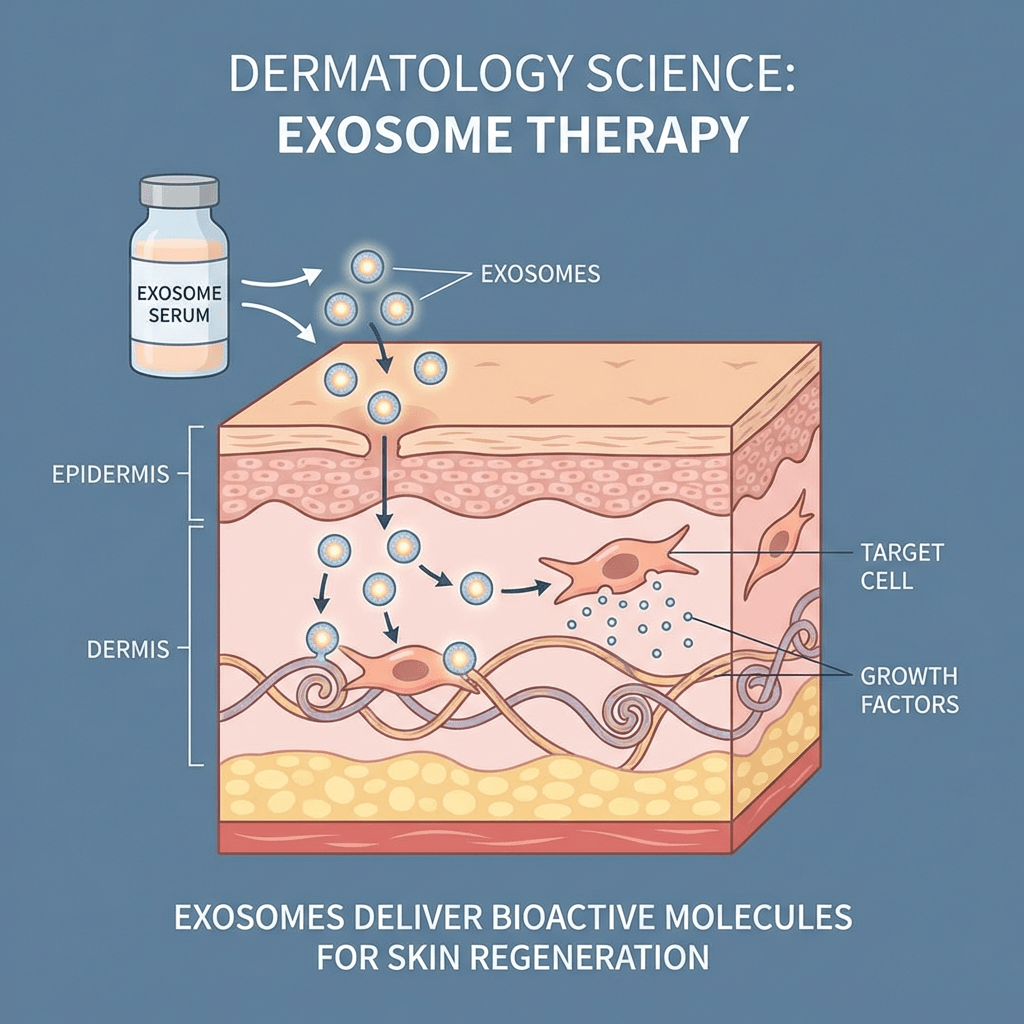
Exosomes are one of the most talked-about innovations in regenerative dermatology and aesthetic medicine. From skin rejuvenation to hair restoration research, these nano-sized messengers are being studied for their ability to influence cellular repair and regeneration.
But what exactly are exosomes? How do they work in the skin? And what does scientific evidence actually support?
This comprehensive guide explains everything you need to know about exosomes in dermatology, including mechanisms, potential benefits, safety considerations, and current research status.
What Are Exosomes?
Exosomes are small extracellular vesicles (30–150 nanometers) naturally released by cells. They are surrounded by a lipid membrane and contain biologically active molecules such as:
- Growth factors
- mRNA and microRNA
- Proteins
- Lipids
- Cytokines
Think of exosomes as the body’s cell-to-cell communication system. They carry molecular signals from one cell to another, influencing how target cells behave.
How Do Exosomes Work in Skin Biology?
In dermatology, cellular signaling is central to processes like collagen production, wound healing, and hair growth. Exosomes contribute to:
1. Collagen Stimulation
They may activate fibroblasts, encouraging collagen and elastin production — critical for skin firmness and elasticity.
2. Inflammation Modulation
Exosomes can influence inflammatory pathways, potentially supporting skin recovery and repair.
3. Angiogenesis
Some studies suggest exosomes promote new blood vessel formation, improving tissue oxygenation and healing.
4. Hair Follicle Signaling
Emerging research indicates they may affect dermal papilla cells and hair growth cycles.
Potential Applications of Exosomes in Dermatology
Current research is exploring exosomes for:
- Skin rejuvenation and anti-aging
- Acne scar remodeling
- Wound healing support
- Hair loss (androgenetic alopecia)
- Post-procedure skin recovery
- Pigmentation research
- Inflammatory skin conditions
It is important to note that many of these applications are still under investigation.
What Does the Scientific Evidence Say?
Laboratory and preclinical studies show promising regenerative effects. However:
- Large-scale randomized controlled trials are still limited
- Long-term human safety data is evolving
- Isolation and preparation methods vary
- Dosing protocols are not standardized
While early data is encouraging, exosome therapy in dermatology is still considered an emerging field.
Are Exosomes Safe?
Short-term studies report generally favorable safety profiles. However:
- Long-term effects are not fully established
- Product quality and manufacturing processes vary
- Regulatory classifications differ across countries
- Not all commercially available exosome products are supported by strong clinical evidence
Careful evaluation and evidence-based use are essential.
Regulatory Status of Exosome Therapy
Globally, regulatory agencies are still defining how exosome-based products should be categorized — whether as biologics, drugs, or cell-derived therapies. This impacts:
- Clinical approval pathways
- Marketing claims
- Quality control standards
Patients and clinicians should prioritize treatments supported by credible scientific data.
Frequently Asked Questions (FAQ)
Are exosomes the same as stem cells?
No. Exosomes are not stem cells. They are vesicles released by cells (including stem cells) that carry signaling molecules.
Do exosomes replace PRP?
They function differently. PRP contains platelets and growth factors, while exosomes deliver molecular signaling cargo. Research is ongoing to determine comparative efficacy.
Are exosome treatments FDA-approved?
Regulatory approval varies by country and indication. Many dermatologic uses are still investigational.
How long do results last?
Since standardized protocols are still evolving, long-term durability data remains limited.
The Future of Exosomes in Dermatology
The future of exosomes lies in:
- Standardized manufacturing protocols
- High-quality clinical trials
- Defined dosing guidelines
- Long-term safety studies
As regenerative dermatology advances, exosomes may become an important adjunct in evidence-based treatment protocols — provided science continues to guide clinical adoption.
Final Thoughts
Exosomes represent a promising advancement in skin regeneration research. Their role in cellular communication, collagen stimulation, and inflammatory modulation makes them an exciting area of study.
However, responsible dermatology demands a balanced approach — embracing innovation while prioritizing patient safety and scientific validation.
 Dr. Sindhuja T, MD
Leave a comment